
Before the blast, there were warnings. This is the story of how a series of stand-offs led to an unforgettable tragedy.
[00:00:35] The Digressor, I'm Trevor, and in this episode I'm talking about the Oklahoma City Bombing.
[00:01:21] I chose this topic because next Saturday after this episode goes live is the 30th anniversary. April 19th, 2025 will be the 30th anniversary of the Oklahoma City Bombing, which took place on the 19th of April, 1995.
[00:01:41] So, in order to really tell the story of the Oklahoma City Bombing, I actually have to kind of go back three years before the attack to the mountains of Idaho. So it's August of 1992, a place called Ruby Ridge.
[00:02:09] Randy Weaver was a former Green Beret living with his family in a remote cabin in northern Idaho. He'd become involved with white supremacist groups and he was wanted by federal agents after failing to appear in court for a weapons charge. U.S. Marshals tried to arrest him quietly, but it turned into a deadly standoff.
[00:02:39] Over the course of 11 days, his 14-year-old son and his wife were both killed. They were shot by federal agents. A U.S. Marshal was also killed in the incident. It set off outrage among anti-government groups. To them, Ruby Ridge wasn't about one person.
[00:03:06] It was about a government they believed had turned on its own people. Just a few months later, the nation's attention shifted to Waco, Texas. In February 1993, the Bureau of Alcohol, Tobacco, and Firearms, otherwise known as the ATF,
[00:03:29] attempted to raid the Mount Carmel compound, home of the Branch Davidians, a religious group led by David Koresh. The ATF believed the group was stockpiling illegal weapons. The raid turned into a firefight, with four federal agents and six Davidians being killed. And then what followed was a 51-day seed broadcast live on TV.
[00:03:59] It culminated on the 19th of April 1993. Federal agents launched a final assault using tear gas. Not long after, the compound caught fire. 76 people died, including David Koresh himself and dozens of children. Somebody who was present that day was a person named Timothy McVeigh.
[00:04:29] He was actually there. He witnessed Ruby Ridge on TV. He wasn't in person. He wasn't force-gumping his way through these incidents. He was there. He drove to Waco and sold bumper stickers condemning the government. He believed the government had executed its own citizens at Waco. And that someone needed to strike back.
[00:04:59] So, a little backstory on him. Timothy McVeigh had served in the Gulf War. He returned home disillusioned and angry. And he began reading anti-government texts and survivalist literature, which included the Turner Diaries, a violent racist novel that imagined the future where patriots overthrew a tyrannical U.S. government using terrorism.
[00:05:26] And, yeah, the seed had already been planted with Ruby Ridge and Waco. McVeigh believed these were signs of a government at war with its own people and decided to fight back. Yeah, he spent months planning his attack. With help from his army buddy, Terry Nichols, he gathered 5,000 pounds of ammonium nitrate fertilizer and fuel,
[00:05:56] enough to level a building. His target? The Alfred P. Murrah Federal Building in downtown Oklahoma City. It was a symbol of the federal government and was home to agencies like ATF, DEA, and Social Security Administration. He chose the date carefully. April 19, 1995. It was exactly two years after the Waco fire.
[00:06:25] At 9.02 a.m. on that day, a Ryder truck loaded with explosives detonated. The blast ripped through the heart of the building, collapsing the front face. 168 people were killed. Over 680 were injured. 19 of the victims were children in a daycare center on the second floor. It was the deadliest terrorist attack on U.S. soil at the time.
[00:06:56] McVeigh was arrested just 90 minutes later. Initially, it was because he was driving without license plates. However, over the next few days, investigators connected the dots. There were fingerprints, truck rental records, witnesses. They figured out they had him in custody. And that was a lucky break. In 1997, he was convicted on 11 counts of murder and conspiracy.
[00:07:26] He never expressed remorse. He said the bombing was retaliation, and he called the children's deaths collateral damage. McVeigh was executed by lethal injection in 2001. Terry Nichols was sentenced to life in prison without parole. The Oklahoma City bombing was not a spontaneous act. It was a long,
[00:07:53] it was the end of a long, dangerous path. It was one paved with paranoia, radicalization, and revenge. It was born in the shadow of Ruby Ridge, fueled by the flames of Waco, and carried out by someone who believed that violence was the only way to send a message. But the only message the world heard that day was tragedy.
[00:08:24] I actually, I remember when this happened, which, obviously, I was only, I was, I was, I was seven, when this happened. Well, six, about to turn seven. And, I were, see, like, I lived in the middle of Texas, and, I don't know if this was actually connected to it. Um,
[00:08:54] because we lived near an Air Force base, and there were sonic booms all the time. And, uh, because, like, the Jets would hit, mock, whatever, and we'd hear the boom, and everything would shake. Well, one of those happened, and the next thing I knew on the TV, they were like, oh, the Oklahoma City bombing. And then, like, my parents were like, oh, we felt that. And, at the time, for the longest time, I thought,
[00:09:22] we felt Oklahoma City bombing all the way in Central Texas. And now that I'm older, I realize that was not possible. And, yeah. But, I've always remembered that. That's what I've always remembered about it. Another thing that I didn't really think of much, I didn't really think much on until I was getting ready to record this episode. There was, uh, a kid in my school, who, uh, like, right before this happened, like,
[00:09:51] a couple months before, he moved to Oklahoma City. I remember they made a big thing. Uh, he moved to Oklahoma City, and we had a farewell thing for him. Uh, like, a going away party. We had cake and ice cream. Yay! Cake and ice cream. And, uh, he went away. And, I remember after this happened, people were saying, that the kids in the school were saying, that he was in the building, and he didn't survive. But, I'm not going to say that that's true, because,
[00:10:21] you know how kids talk. They hear, I remember after Columbine, people were saying in my school, oh, it's going to happen here, it's going to happen tomorrow. And, people kept saying that it's going to happen here, it's going to happen here, it's going to happen here. People said, and so, like, I don't know if he was in it. I don't even remember his name, so I can't, like, I don't remember what he looked like, so, like, I can't even go and look at the, the records, and be like, oh, that's him. But, like,
[00:10:48] that's two things that I remember about Oklahoma City bombing at the time. I felt something that I thought was the explosion, but it was most likely a sonic boom from Dias Air Force Base, and that there was a kid in my class who moved to Oklahoma shortly before, and the kids in my class said he was in it, but it was the kids saying it, not the teachers. The teachers never made the announcement, and, uh, just so you know, he died in the,
[00:11:17] of course, we were like six or seven. I don't think they would have made that announcement to us. Maybe if we were in high school, they would have made the announcement, but I don't, I don't know, but that's something I always remembered. I did have a friend, like, I met, I made, a friend I made in 2010, I didn't know her at the time, I made a friend in 2010 who later, she lives in Oklahoma, she told me her uncle died in it, so, in a way,
[00:11:47] I do know somebody who died in it, I didn't know him, obviously, because that was way before I even knew her, but, yeah, the, she says every year her family, she and her family goes to the memorial, the memorial has, uh, a bunch of chairs for all the victims of the tragedy, and they light up at night, and, it looks really cool,
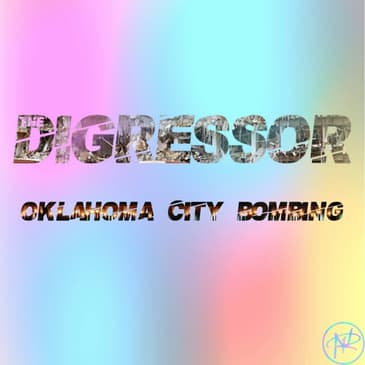
[00:12:17] it's, well, I like, cool at night, I actually used the image, in, uh, my, uh, an image of the memorial at night, in the, type, episode, logo, in the Oklahoma City, bombing, part, um, that's what the lights are, behind the words, and, oh, I didn't address it, um,
[00:12:44] I'm not fully recovered from what was wrong last time, it's been a week since I recorded the last episode, and my, my voice has gotten better, but as you can tell by the scratchiness, it's not entirely, gone, but at least it's not worse, hopefully by the next episode, it's gone entirely, well, maybe not, I'm planning, on recording the next episode, immediately after finishing this one,
[00:13:14] but, it depends, on how I'm feeling, in the next, half hour, but I digress,
[00:13:58] the rambler network, and,